Dr. Kanu Okike, a 2026 recipient of the HVO Golden Apple Award, has been volunteering with the Ghana orthopaedics project at Komfo Anokye Teaching Hospital (KATH) since 2016. In that time, he has seen great strides made. “When I started volunteering, there were only two residents in each class, and the curriculum needed development,” he said. “Now, the program has ten residents in each class. In a country where there are fewer than 100 fully trained orthopaedic surgeons, for one site to graduate ten residents a year makes a huge difference in the care that can be provided across the country – not only in the major cities, but also in smaller hospitals throughout the country.” In addition to the expansion of the residency program, the department is now planning to launch a post-residency fellowship training in trauma. In partnership with HVO and the Hospital for Special Surgery in New York City, Dr. Okike and other North American volunteers combined to spend a total of 52 weeks at KATH in 2024 and 2025 to provide a 1-year orthopaedic trauma fellowship for two recent graduates on-site at KATH. Over the next two to three years, these two KATH surgeons will begin offering a trauma fellowship to other orthopaedic residency graduates. “You can see how just by training two Ghanaian surgeons, you increase their capacity to train others,” said Dr. Okike. He appreciates that HVO’s model is one of education and partnership: “No one in the KATH orthopaedic surgery department has ever said to me, ‘We want surgeons to come here and do our cases for us.’ Instead they say, ‘We want to do this kind of surgery, but we don’t have the right OR table, or the patient can’t afford implants, or we want to train our residents but we need help setting up this curriculum. We want to do research, but we don’t have funding. We want to do a new type of surgery, but we don’t yet know how.’ These are the things they ask for, and HVO’s model responds to that and respects that and focuses on capacity building to improve what the surgeons on site can do for themselves and for their patients.”
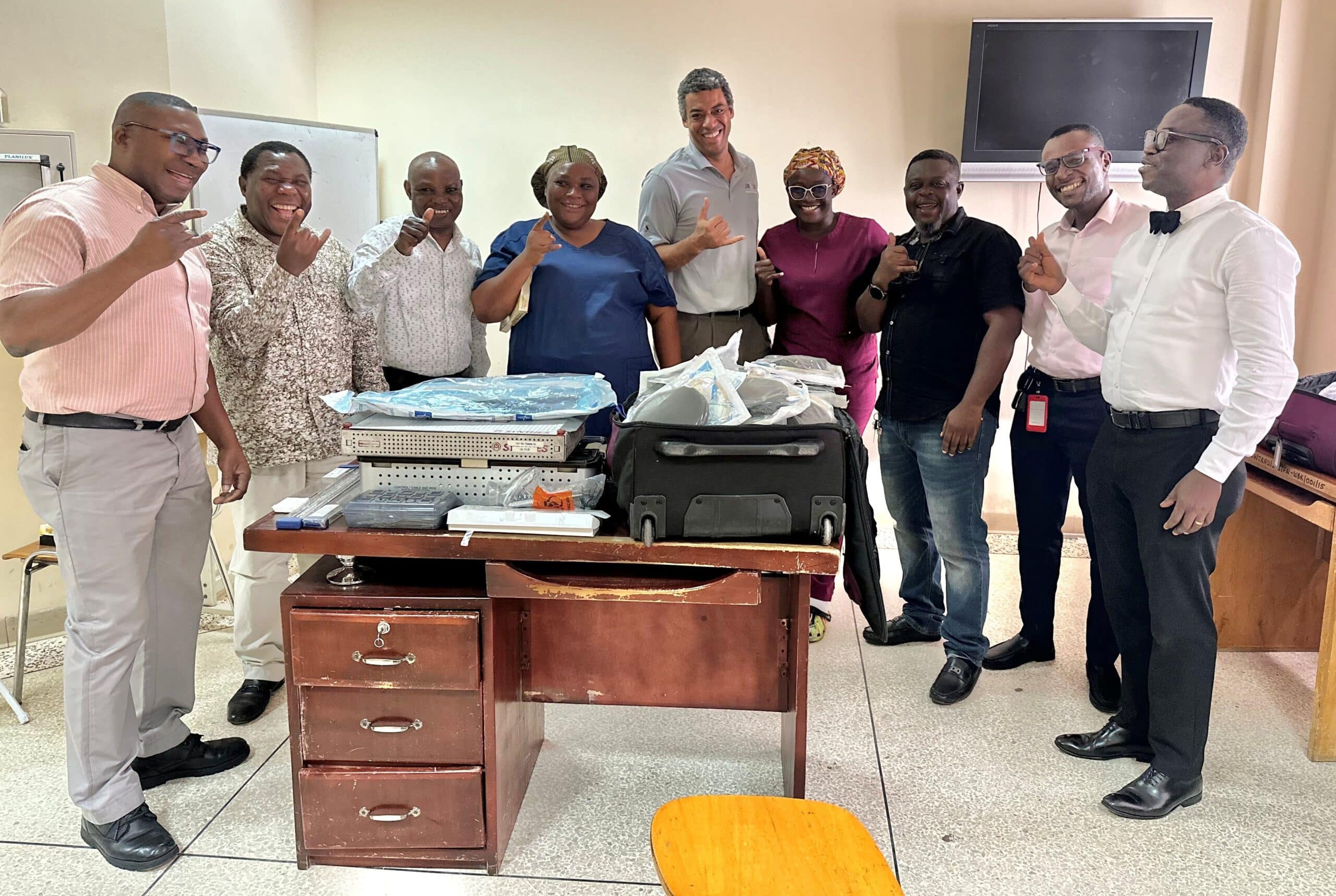
Along with training, Dr. Okike and colleagues have been able to provide much needed resources to improve quality of care. “They have a fluoroscopy machine to use for X-rays, but they didn’t have a radiolucent OR table. That makes it hard to use the X-ray,” said Dr. Okike. He was able to help secure a donated radiolucent table in 2019, drastically increasing the number and types of cases the department can take on. He and others also facilitated a partnership between KATH and the Surgical Implant Generation Network (SIGN), granting the orthopaedic department access to free implants that patients could not otherwise afford. “By serving as a bridge between what we have and what they need, we can improve their capacity not only during the weeks that we are on site but year-round,” said. Dr. Okike.
The equipment and the training are having an impact on individual lives, improving outcomes. Dr. Okike shared the story of a boy whose case he oversaw on his most recent trip: “There was a twelve-year-old boy who was riding on the back of a moped. He was tossed from the vehicle and sustained a complex pelvic fracture. By the time he was deemed safe for surgery, three weeks had passed. Children heal very fast, so after three weeks that fracture has almost healed in a new position. That represents a very challenging case, even at a major U.S. medical center. But due to what we’ve been able to establish at KATH, this was a case that we could take on. I worked alongside one of the trauma fellowship-trained surgeons. We used the radiolucent OR table that we had gotten donated and shipped, and we were able to perform this pretty complex surgery together. I recently checked in with the KATH team, and the patient is now about six months post-surgery. The fracture has healed very nicely, and the patient is walking around as if nothing happened. These interventions, they matter on a big scale, but they also matter for that individual patient. If we hadn’t been able to take on that case, the fracture would have healed with substantial deformity. He would have been left with a leg two or three inches short. Over the course of time, especially in a child that young, it could even have affected the way his spine developed.”
Dr. Okike’s commitment to service work in Ghana started when he was young. Unable for various reasons to visit his father’s home country of Nigeria, he chose to spend the year between college and medical school in nearby Ghana. “I spent the year volunteering in a rural village on the southern coast,” he said. “We had electricity but no running water, and I spent most of my time doing AIDS education in high schools. More than anything, it taught me a lot about how others live in this world. When I left, I promised everyone I would return once I was a surgeon. I think everyone says that, and the people I worked with in Ghana just smiled and nodded. After I got back to the U.S., I spoke to everyone who would listen about my interest in orthopaedic surgery and in international health. All of them told me if I wanted to work in global health I needed to focus on pediatrics or infectious diseases, not surgery. I had one mentor, Paul Farmer, who has done so much for global health, who sat me down and said, ‘If you want to do orthopaedics, do orthopaedics. We need that too.’ That was the first time I understood that it was possible to be an orthopaedic surgeon and also do international work, and that this work was needed. So after finishing my training and getting my career going, I decided it was time. I was lucky that HVO had a site in Ghana.”
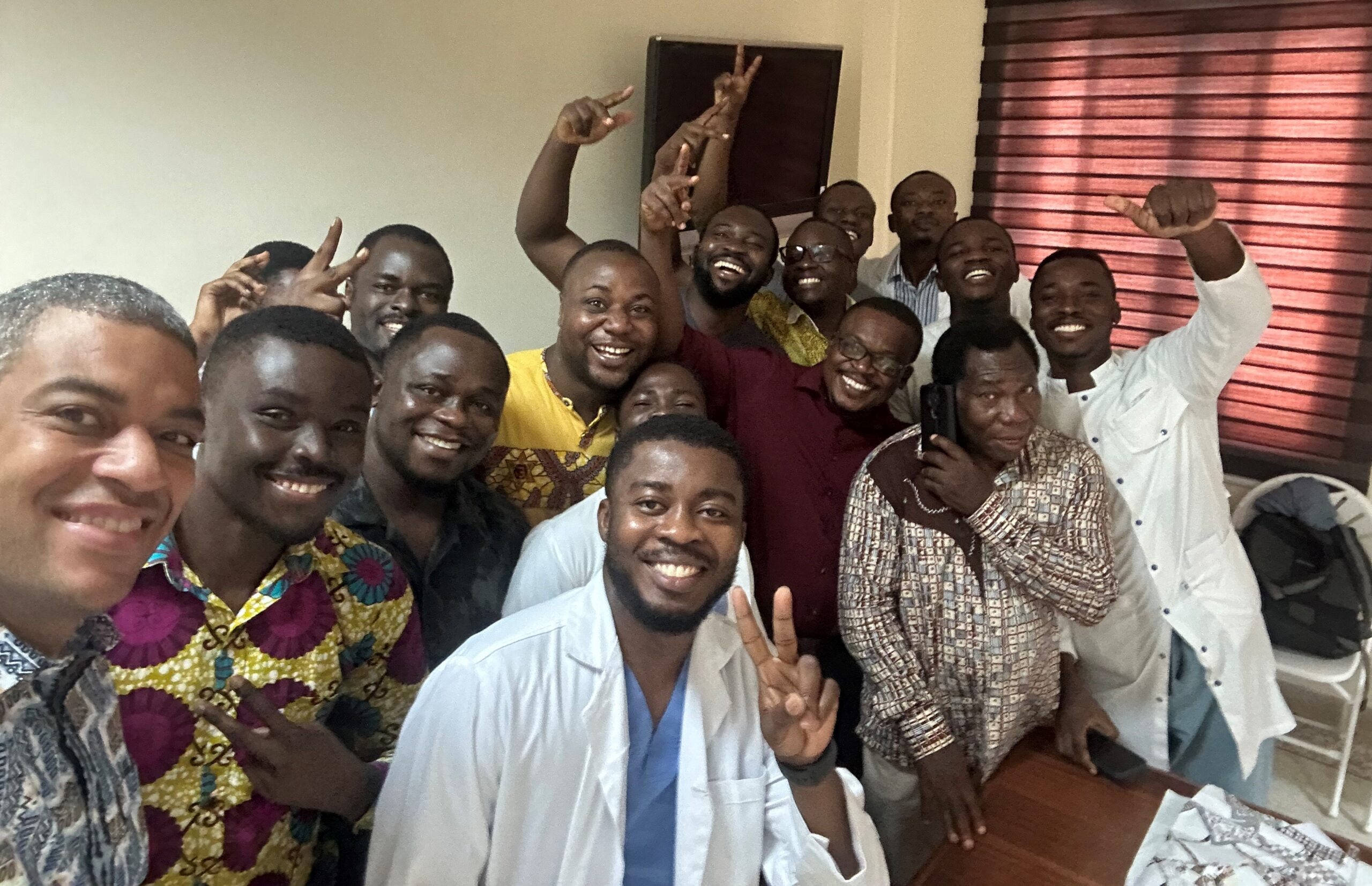
HVO is lucky to have Dr. Okike! His 2026 Golden Apple reflects the extraordinary commitment he has made to our partners, their patients, and their communities. “I want to thank my Ghanaian colleagues — the attendings and the residents who have been so kind and welcoming to me from the very first time I arrived. It requires, at least initially, a lot of effort on their part to host us as volunteers, and I appreciate all the kindness and effort they have shown us. This is an award that recognizes the work that we as a group have done and accomplished, and it’s one that I share with them.”