
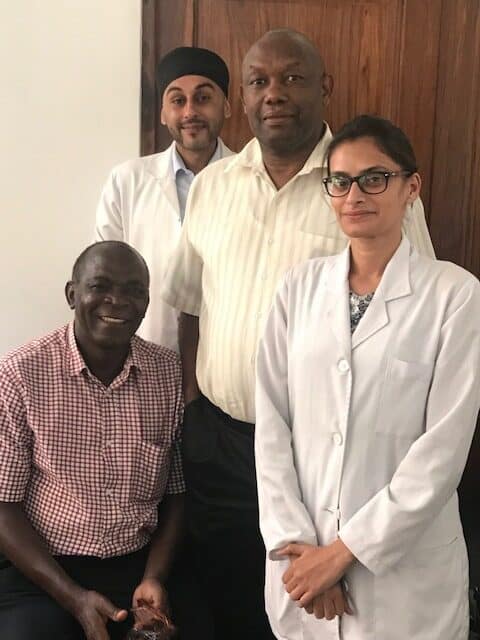
Dr. Louis Rafetto has been volunteering with the HVO oral health program since 1992. In that time, he has completed assignments in India, Peru, Colombia, Cambodia, Tanzania, and Nicaragua. “I’ve always been interested in volunteering,” said Dr. Rafetto. “I was looking for overseas type missions that combine exploration of cultures with opportunities to share my expertise.” A colleague, Dr. David Frost, who, at various times, has been an HVO board member, steering committee chair, project director, and volunteer, recommended looking into HVO. The mission fit what Dr. Rafetto had been searching for.
His first trip was to Christian Medical College in Vellore, India. “I went with a small group of surgeons,” said Dr. Rafetto. “It was the first, and one of the most important, trips I’ve made. I was able to put expectations behind me, be flexible, and make the most of the experience culturally and surgically. The unique individuals who served with me were so inspiring. One thing that was true, and has been true everywhere – people are so thankful for whatever you can share with them, both the doctors and the patients.” Since India, Dr. Rafetto has experienced many countries and cultures and met diverse groups of people. He believes volunteering has given him the opportunity to see amazing places he would not have otherwise seen and meet people he would not otherwise have met. The experiences have continued to inspire him in his career. “I have a picture hanging in my office of a little girl my team had performed cleft lip surgery on,” he shared. “She was two years old. We handed her back to her mother, and her mother’s smile over what we were able to do for her child was a moment I will never forget.”
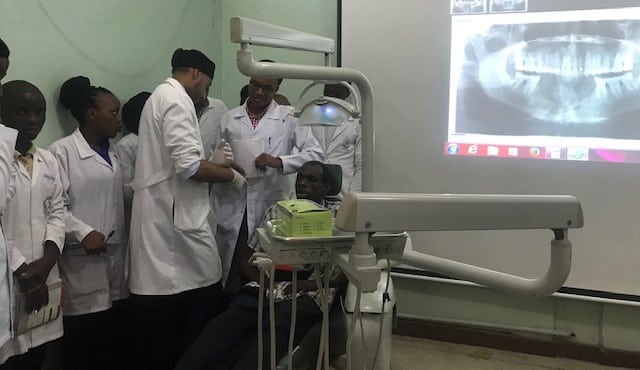
Dr. Rafetto also remembered the impact he had in Peru: “A group of us took some bone plating kits, which you use to put bones back together in facial bone fractures. The providers there didn’t have access to those, so we donated the kits and bone plates and gave a lecture to the community, which was well attended. They told me that it was very important for them to incorporate into their care of trauma patients. They did not have prior experience and were incredibly thankful. They may have used up all the materials, but now they are familiar with the technology and know how to use it.”
Experiencing how medicine is practiced in resource-scarce regions taught Dr. Rafetto to be more resourceful and has changed the way he teaches his students at home in Delaware. “I’ve learned you can do complex procedures with less than the cutting-edge equipment we’re used to in this country,” he said. “You can solve clinical problems with less. I teach residents in my hospital here, and they’re sick of hearing me tell them to figure out other ways to do things because they won’t necessarily always have access to everything.” On a personal level, he has recognized how fortunate he is to have had the professional opportunities the United States has to offer. He has also made lasting friendships with other volunteers and values these connections.
Dr. Rafetto believes that education is a critical part of his volunteer service: “I had been on a mission trip before where teaching was not part of it. We just went in and did procedures, and we weren’t leaving behind anything other than a few patients who benefitted. If you hand off the ability to do these procedures to the local doctors, you have made a more enduring impact. To just go and do a bunch of procedures isn’t all that fulfilling, but to go help the people there be better capable of moving forward – that’s a big part of what attracted me to HVO.”
Dr. Rafetto is not done – he has plans to travel to Nepal later this year. To those who may not be quite ready to head off on their own adventure, Dr. Rafetto offered this advice: “You have value to offer. You don’t need to go on one of these trips to recognize the value of sharing the knowledge and expertise that you have. You can enable other people to do that through contributions to HVO. A lot of people may think, ‘Sounds great, but I can’t take two weeks off,’ or, ‘I don’t travel well.’ You can still support others. HVO is not only directly helping individuals in these countries – they are also equipping them to be able to do the work themselves once volunteers have gone.”
To learn more about current volunteer opportunities with our oral health program, contact Program Manager Lauren Franklin at l.franklin@hvousa.org.