
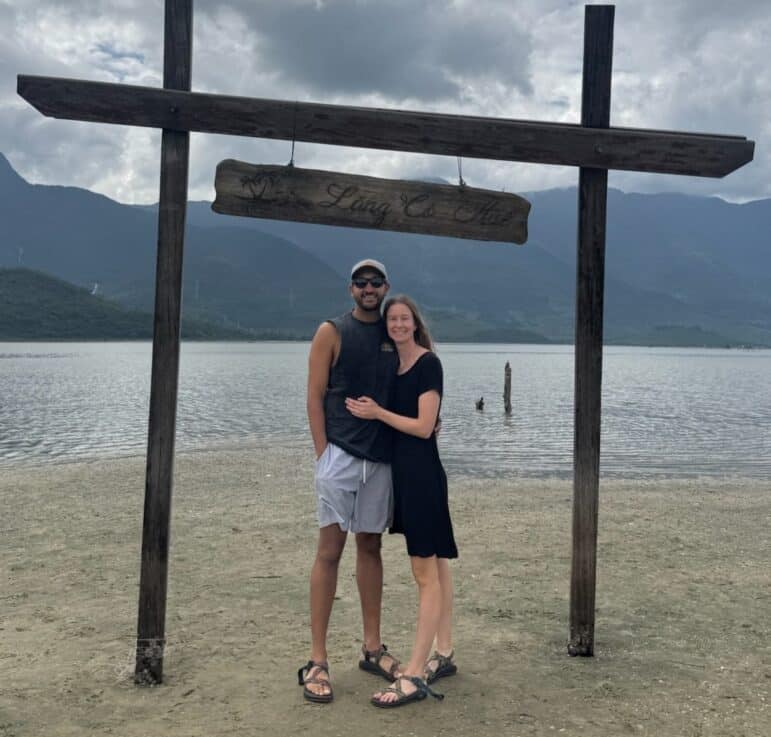
HVO does not see many volunteers travel as a couple, so we are excited to highlight Justin Johal and Ashlyn Fitzgerald, an anesthesiologist and pediatric nurse practitioner on a four-month volunteer assignment. After a one-month stay in Hue, Vietnam, they will continue on to Cambodia where they will serve as Feinberg Fellows at Angkor Hospital for Children. With two Feinberg Fellows from different disciplines working together, this fellowship will provide the opportunity for discussions and demonstrations of interdisciplinary collaborations. During an interview three weeks into their stay in Vietnam, Ashlyn and Justin shared a little about their background and their experience as married volunteers.
How did you hear about HVO?
Justin: I first heard about Health Volunteers Overseas through one of my mentors, Dr. Jo Davies, while I was completing my anesthesiology residency at the University of Washington in Seattle. I had always been deeply interested in global health and medical education, but, as I began residency, the COVID-19 pandemic started and significantly limited opportunities for international work and travel. As the world reopened and we found ourselves at a point where a longer-term commitment was possible, my wife and I started exploring organizations that emphasized sustainable education rather than short-term care. HVO stood out because of its focus on teaching, mentorship, and long-term partnerships with local institutions. It felt like a natural fit for both of us, professionally and personally, and aligned with how we wanted to contribute.
How did you decide to make this big commitment together as a couple?
Ashlyn and Justin: Both of us have always aspired to incorporate global health into our careers. We have each worked abroad individually in the past and knew that we wanted to live abroad for an extended period of time at some point together. We feel very lucky that we were at a point in our lives and careers that we were able to accept this opportunity to volunteer through HVO.
Has volunteerism or education always been a part of your relationship?
Ashlyn: Justin and I met while working at Seattle Children’s Hospital. I have always worked with children and was in my first year working as a pediatric nurse practitioner. Justin, on the other hand, was forced to rotate through the children’s hospital as a part of his residency program, while openly acknowledging he had minimal experience working with children. In fact, he told me that he had never held a baby before and convinced me to teach him. Turns out this wasn’t entirely true, but it did allow for us to have an opportunity to talk and get to know each other one-on-one (and Justin did learn more about how to care for a baby!). After his rotation was finished and we were no longer coworkers, he asked me out, Now, six years later, we are married and on this adventure together! During the last six years, we have been medical volunteers together intermittently, but never for a prolonged time like this. It is great to be working together again.
Do you feel that volunteering together has made the experience stronger or more meaningful?
Ashlyn: Volunteering together has definitely made the experience more meaningful! This is the first time in our relationship where we have had dinner together every night of the week (since we often work conflicting shiftwork back in the states, we can sometimes go days without seeing each other!) It has also been great to be here together to be able to bounce ideas off each other, practice presentations or lectures to someone else who has knowledge about the field, etc.
While in Cambodia, we are hoping to teach simulations together, incorporating interdisciplinary roles and activities. Additionally, we will be giving a lecture for HVO’s Remote Education Interface (REI) together focusing on both the nursing and anesthesia aspects of care for a patient. I think by being here together, we can uniquely offer together as a couple patient care from different perspectives, while at the same time exemplifying the importance of communication and teamwork.
Describe your volunteer activities.
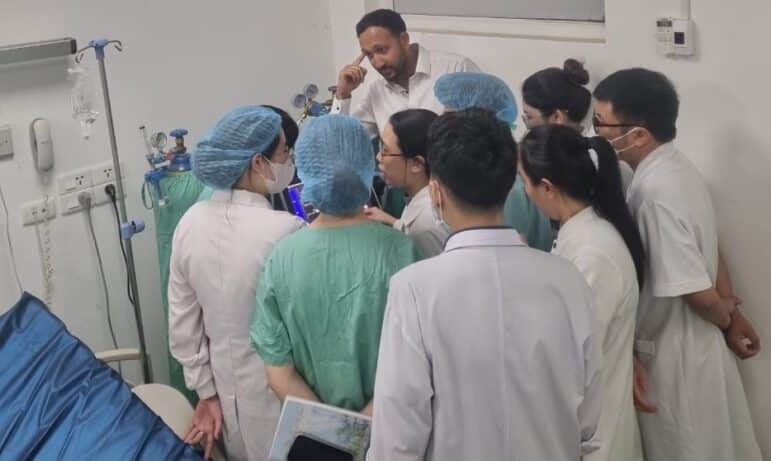
Justin: During our time in Vietnam, my work has included a mix of ICU-focused lectures, anesthesia lectures, bedside teaching with and without ultrasound, and two hands-on simulation labs. The teaching has ranged from formal classroom settings to real-time discussions at the bedside and in the operating room, which has allowed for practical, immediately applicable learning.
One of the most rewarding aspects has been teaching not only residents at Hue University, but also engaging with faculty members. Many sessions have turned into collaborative discussions rather than one-directional lectures, which reinforces HVO’s mission of mutual learning and partnership.
Ashlyn: I have been working with the school of nursing. I have given lectures to both the graduate and masters nursing students on the topics of Pediatric Emergency Triage, Tips/Tricks for a Pediatric Physical Exam, Privatization of the Pediatric Patient, Pediatric Respiratory Emergencies, Pediatric Cardiac Emergencies, Pediatric Fever and Shock in the Pediatric Patient. Additionally, I presented at a research seminar for the hospital nurses and will be presenting continuing medical education for the hospital nurses next week.
Have you seen any immediate impact?
Justin: Even though we have only been here for three weeks so far, there are encouraging early signs. I’ve noticed residents beginning to incorporate ultrasound more frequently into their daily practice, not only in the operating room, but also in the ICU setting.
In addition, there have been direct, hands-on clinical moments that felt especially impactful. While in the operating room, I taught fiberoptic intubation and the use of a fiberoptic scope to verify endotracheal tube placement in a real patient. This was a live clinical experience where residents were able to observe, ask questions, and then practice the technique themselves. Seeing them understand the indications, apply the skill, and gain confidence in real time was incredibly meaningful.
Even small changes, like reaching for an ultrasound probe more readily, applying new airway techniques, or asking more nuanced clinical questions, suggest that the teaching is resonating and translating into practice.
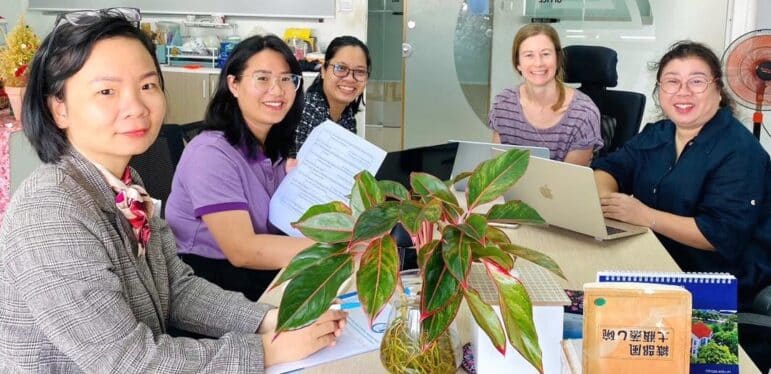
Ashlyn: During the research seminar, the participants had a lot of really great ideas for possible research topics. I was able to provide some examples of policies and pathways that we use in America and at the hospital where I worked (for example an asthma action plan and central line care) which will hopefully provide some guidance for their future research projects. Additionally, the participants broke into small groups, and each group came up with a research question in the format we had just discussed and practiced (PICO format) during the seminar. It was exciting to see them immediately show their understanding of the concept and impressive to see their quick brainstorming.
Do you foresee any long-term impact?
Justin: Absolutely. One of the strengths of HVO’s model is its emphasis on education that builds over time. Skills like ultrasound interpretation, clinical reasoning, and structured decision-making tend to compound as trainees advance in their careers.
My hope is that the residents I’ve worked with will continue to refine these skills, teach them to others, and adapt them to their local context. Over time, this can influence training culture, patient care approaches, and even curriculum development.
Ashlyn: There has not been a pediatric nursing volunteer through HVO at Hue for several years. Hopefully by being here, it will help reignite the relationship. One of the important impacts of global health is the exchange of culture, ideas, language and knowledge. That exchange is essential for innovation and new ideas on both sides. I have learned just as much from the faculty and staff that work here as they have learned from me.
What are you most looking forward to as your journey continues?
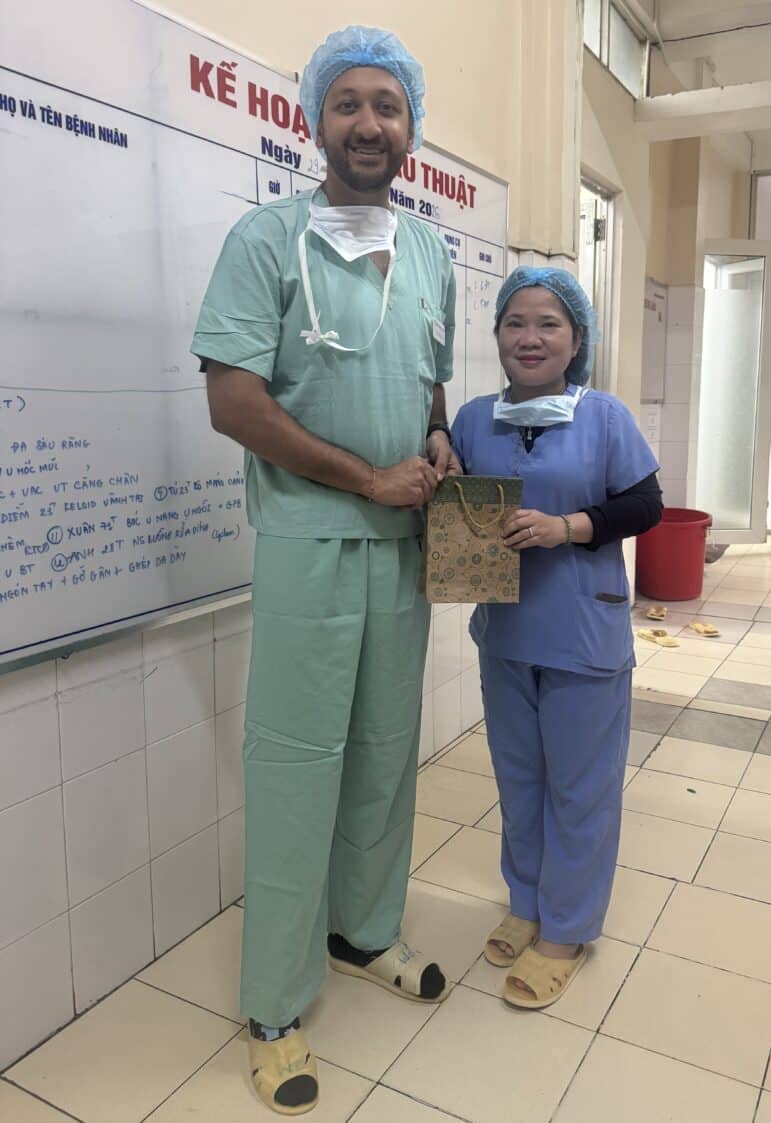
Justin: We’re most looking forward to deepening the relationships we’ve started building with trainees, faculty, and other volunteers, and continuing to learn from the local medical community. Each setting brings new perspectives and challenges, and that mutual exchange has been incredibly enriching.
We’re also excited about the next phase of our journey, which will take us to Siem Reap, Cambodia, where we’ll be volunteering at Angkor Hospital for Children for three months. The opportunity to work in a pediatric-focused setting and continue contributing through education and bedside teaching is something we’re really looking forward to.
On a personal level, continuing this journey together has been special. Sharing experiences outside of our usual routines, especially those rooted in service, learning, and connection, has made this chapter particularly meaningful for both of us.
Ashlyn: Ditto to what Justin said! I am excited to go to Cambodia and be introduced to a new country, culture and healthcare. I think I will be able to take a lot of the lessons that I have learned from volunteering in Vietnam to make me an even more productive and helpful volunteer in Cambodia.
Do you feel that sharing the volunteer experience has had a positive impact on you?
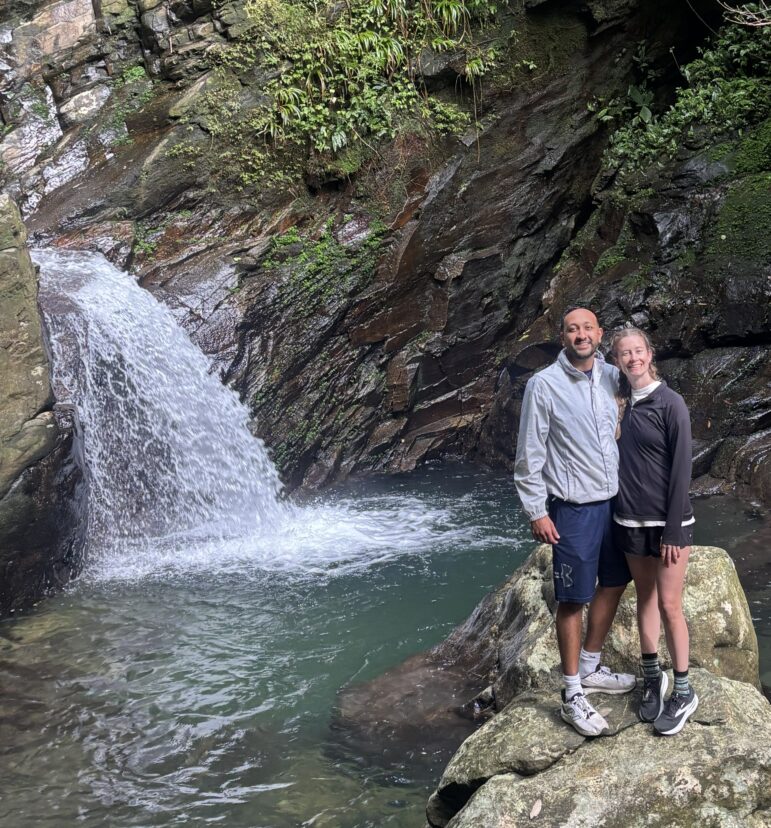
Ashlyn: Definitely! This experience so far has helped remind us why we both went into health care in the first place, and we love being able to work together in this new way. Additionally, we have had an amazing time exploring Vietnam when we are not busy at the university/hospital. We got to trek in Bach Ma National Park, lay on the beach in Lang Co, and tried so many new and delicious foods. People we have met here have been so wonderful, even going out of their way to show us some local experiences including karaoke and a motorbike tour of Hue.